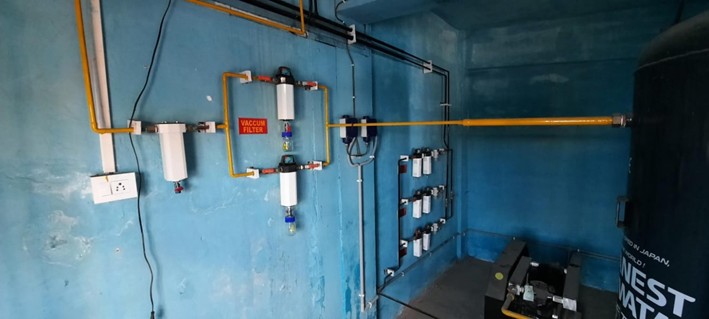
Vacuum pump system central is a centralized medical equipment system designed to generate negative pressure (vacuum) and distribute it to clinical areas via a fixed pipeline and terminal outlets (for example, wall or ceiling outlets). The clinical device used by staff at the point of care is usually a suction regulator (or vacuum regulator), connected to a collection canister and patient tubing; the central plant provides the vacuum source behind the scenes.
At a high level, a typical Vacuum pump system central includes (varies by manufacturer and local standards):
One or more vacuum pumps (often configured in duplex or triplex for redundancy)
A receiver tank to stabilize supply and manage short-term demand peaks
Control panels for automatic staging (lead/lag), monitoring, and alarms
Filtration and separation components intended to protect pumps from contamination and liquids
Exhaust piping that discharges to a safe outdoor location
Pipeline distribution, zone valves, and terminal units/outlets in clinical areas
Area and master alarm panels (and sometimes integration to a building management